Viols
The Instruments
Each instrument is entirely handcrafted in accordance with the traditions of historical lutherie, drawing on the study of original instruments and period construction techniques.
The woods are carefully selected for their acoustic qualities, stability, and natural beauty. Resonance spruce, maple and fruitwoods are used according to the characteristics of each historical model.
The varnish is prepared and applied using traditional methods based on natural resins, protecting the wood while preserving its acoustic properties and enhancing its appearance.
Each instrument is the result of meticulous craftsmanship, combining respect for traditional techniques with the expectations of today’s musicians.
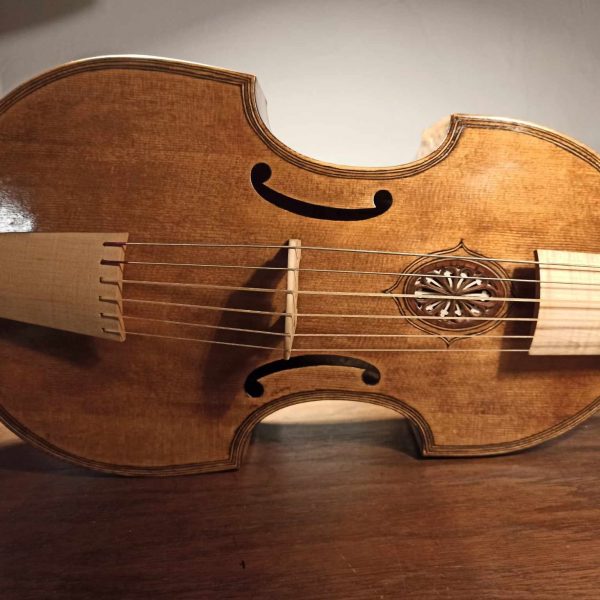
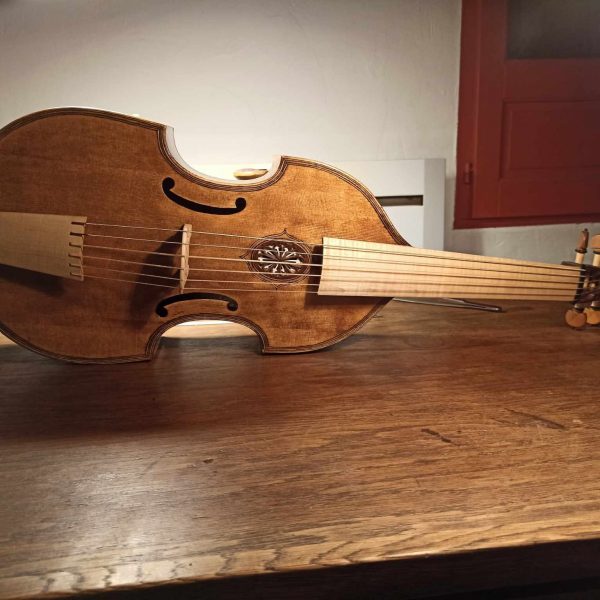
viol - large treble - henry jaye - 1629


Specifications:
- String length: 430 mm
- Back length: 465 mm
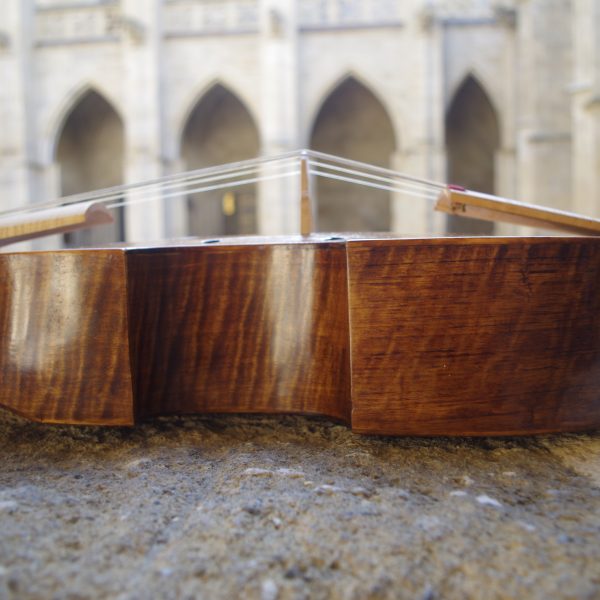
- Materials: Flamed walnut for the neck, back and ribs. Spruce soundboard bent from seven pieces.
- Set-up: Flamed maple fingerboard and tailpiece.
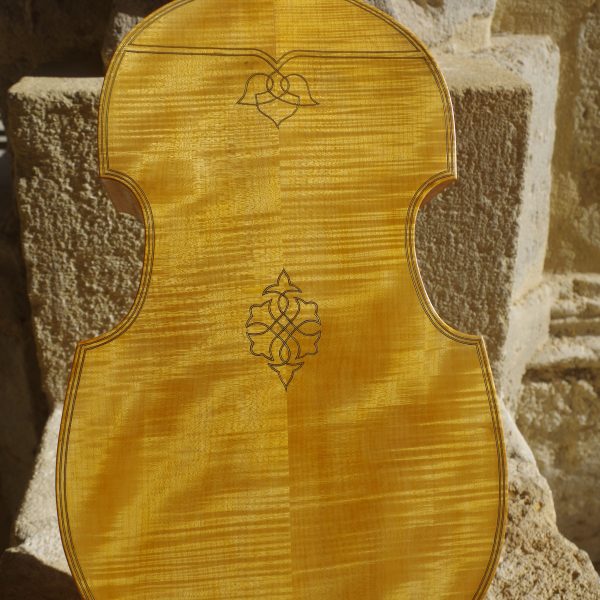
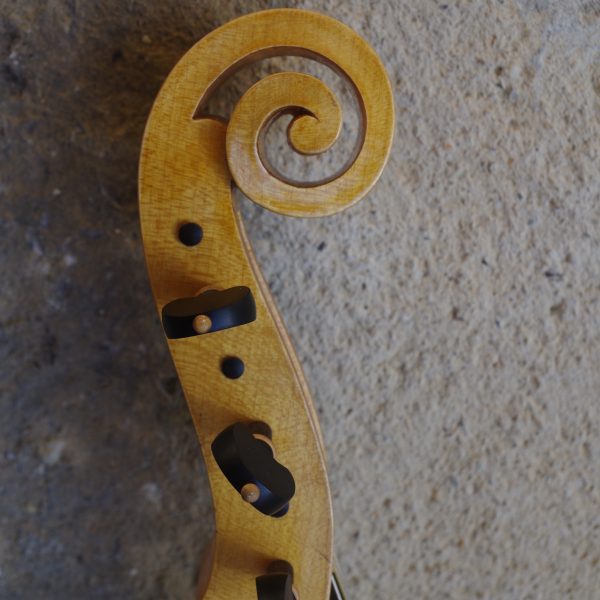
- Features: A viola da gamba decorated with a rose, an openwork scroll with bas-relief carvings, and a decorative inlaid pattern on the back. The instrument is tuned in C.
History:
Henry Jaye was a renowned viol maker. Thomas Mace ranked him among the five most prominent viol makers of the past. Based in Southwark, in the south of old London, around twenty of his instruments are believed to have survived to the present day.
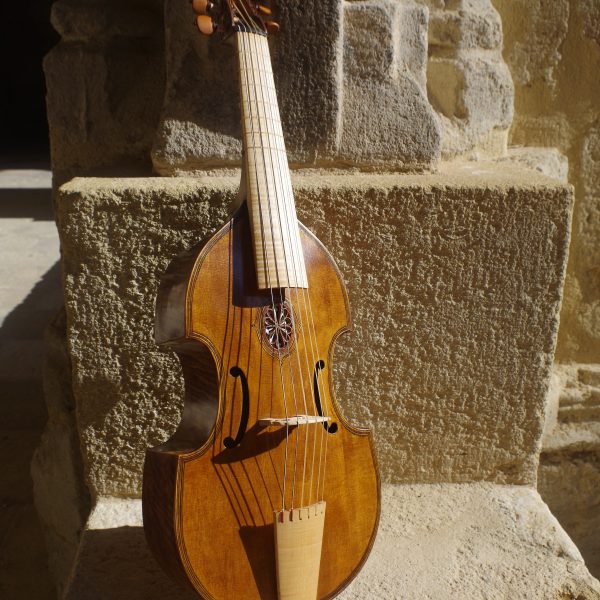
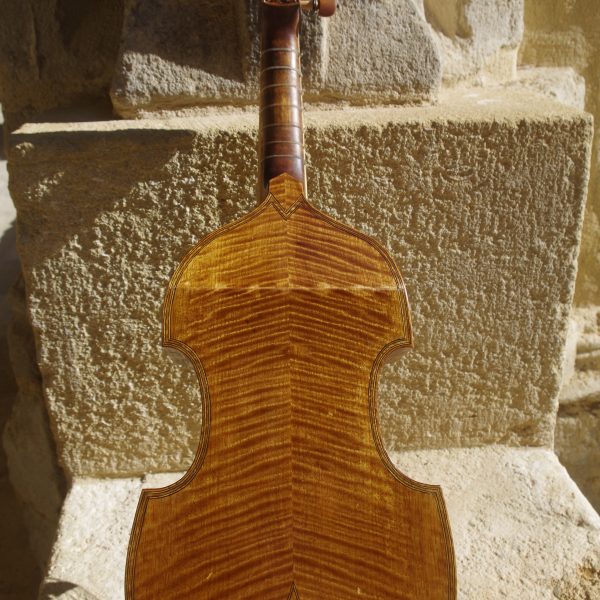
viol - bass (divison viol) - barak norman - 1692


Specifications:
- String length: 670 mm
- Back length: 665 mm
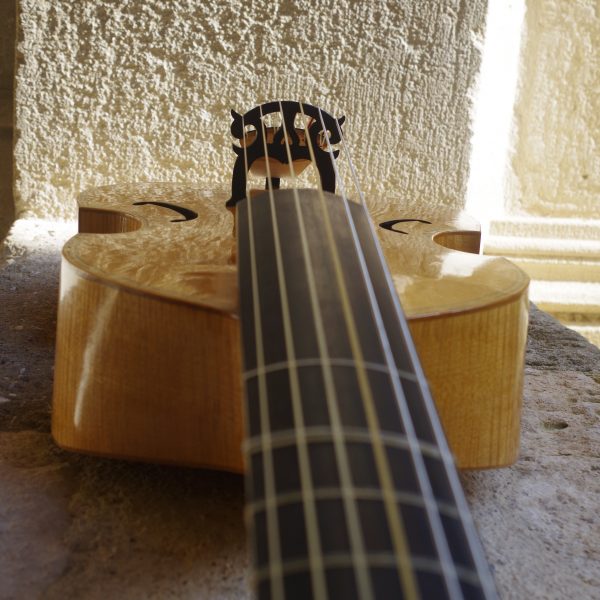
- Materials: Flamed maple for the neck, back and ribs. Spruce soundboard bent from three pieces.
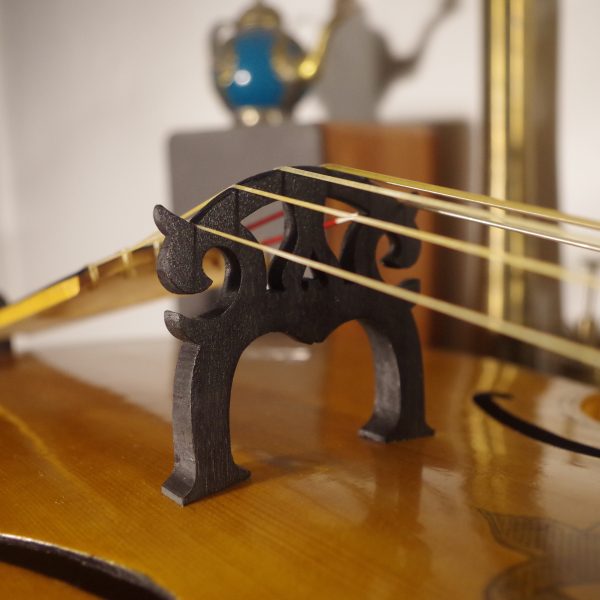
- Set-up: Ebony-veneered maple fingerboard and tailpiece.
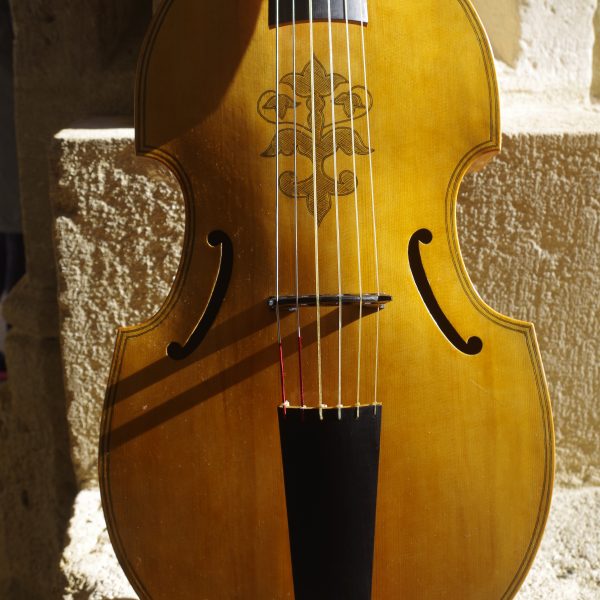
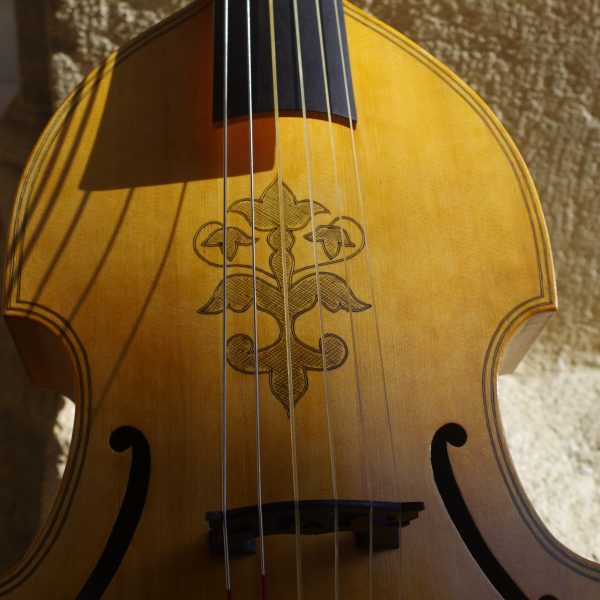
- Features: A six-string bass viola da gamba decorated with an openwork scroll, a motif on the upper part of the soundboard, and decorative purfling on the back.
History:
Barak Norman had his workshop in London at the end of the 17th century, where he produced viols, violins, and cellos. His instruments are often decorated with inlays and ornamental purfling, following the English tradition of that period.